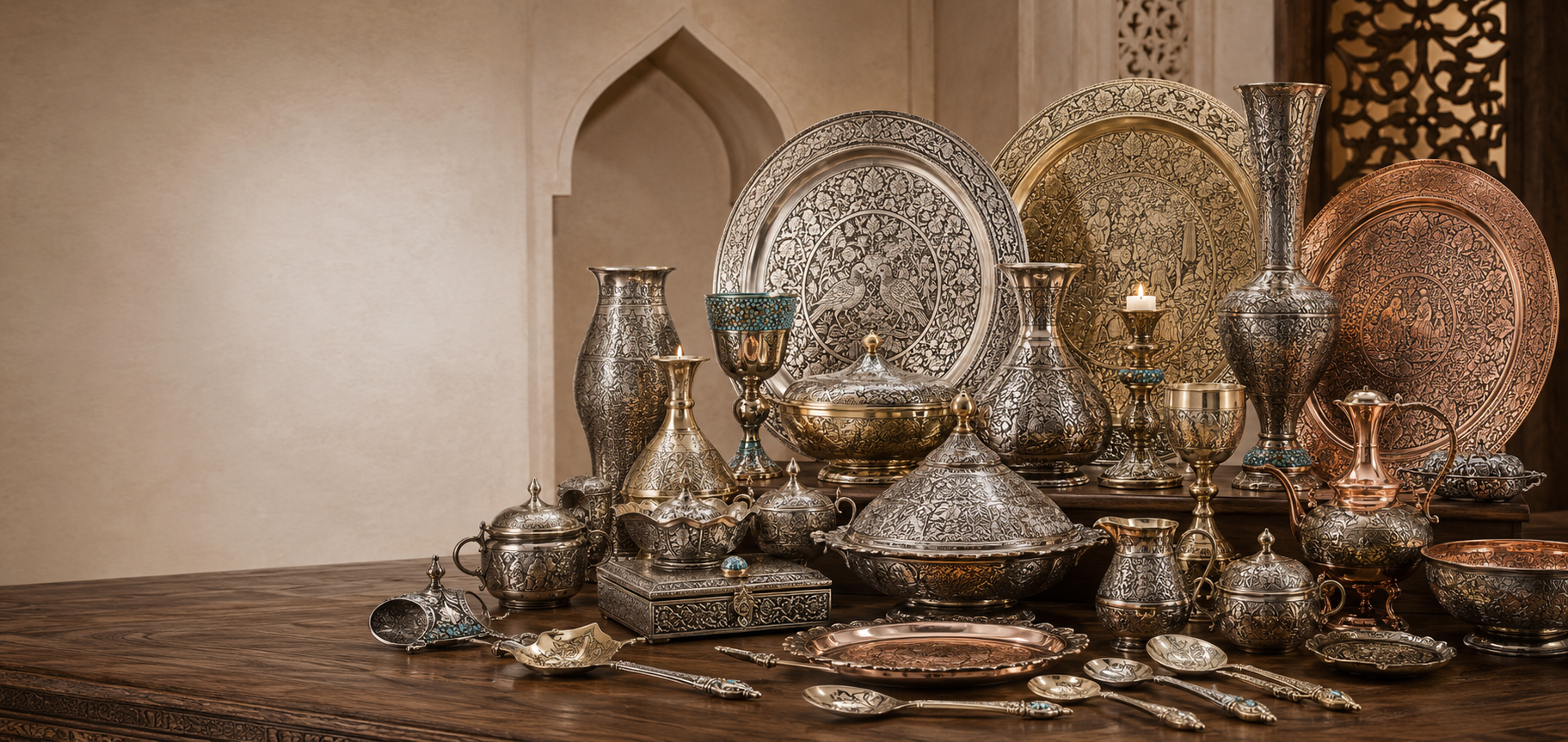
the ancient Persian art of hand-engraving intricate designs onto metals like copper, brass, silver, and gold using steel chisels and a hammer. Literally translating to "pen striking," it is one of Iran’s oldest and most revered traditional handicrafts, with a rich history stretching back thousands of years
The Tar Base: Before striking, the artisan fills or coats the back of the metal object with a thick layer of bitumen (tar) mixed with gypsum. This absorbs the shock of the hammer strikes, prevents the metal from warping or tearing, and drastically dampens the noise.
The Engraving (Ghalam): Using an array of specialized steel chisels (acting as the "pen") and a hammer, the artisan (known as a Ghalamzan) carves or indents patterns into the metal surface. Master craftsmen often engrave these highly detailed patterns completely from memory without drawing a draft first.
Finishing and Contrast: Once completed, the tar is melted away. The piece is polished, and a dark substance—often charcoal powder or specialized chemicals—is rubbed into the fine grooves to create a stark visual contrast, making the intricate lines stand out.
History and Cultural EvolutionThe roots of Ghalamzani trace back to ancient times, with major historical evolutions across Persian dynasties:Ancient Origins: While early metalworking techniques began thousands of years ago, documented milestones flourished during the Achaemenid (the golden age of metalworking) and Sassanid eras, where the technique decorated royal armor, shields, and luxury vessels.Golden Ages: The art form reached its aesthetic peaks under the Seljuk and Safavid dynasties.
During these eras, artisans incorporated complex geometric styles, Islamic calligraphic poetry, and detailed miniature storytelling into their metalwork.
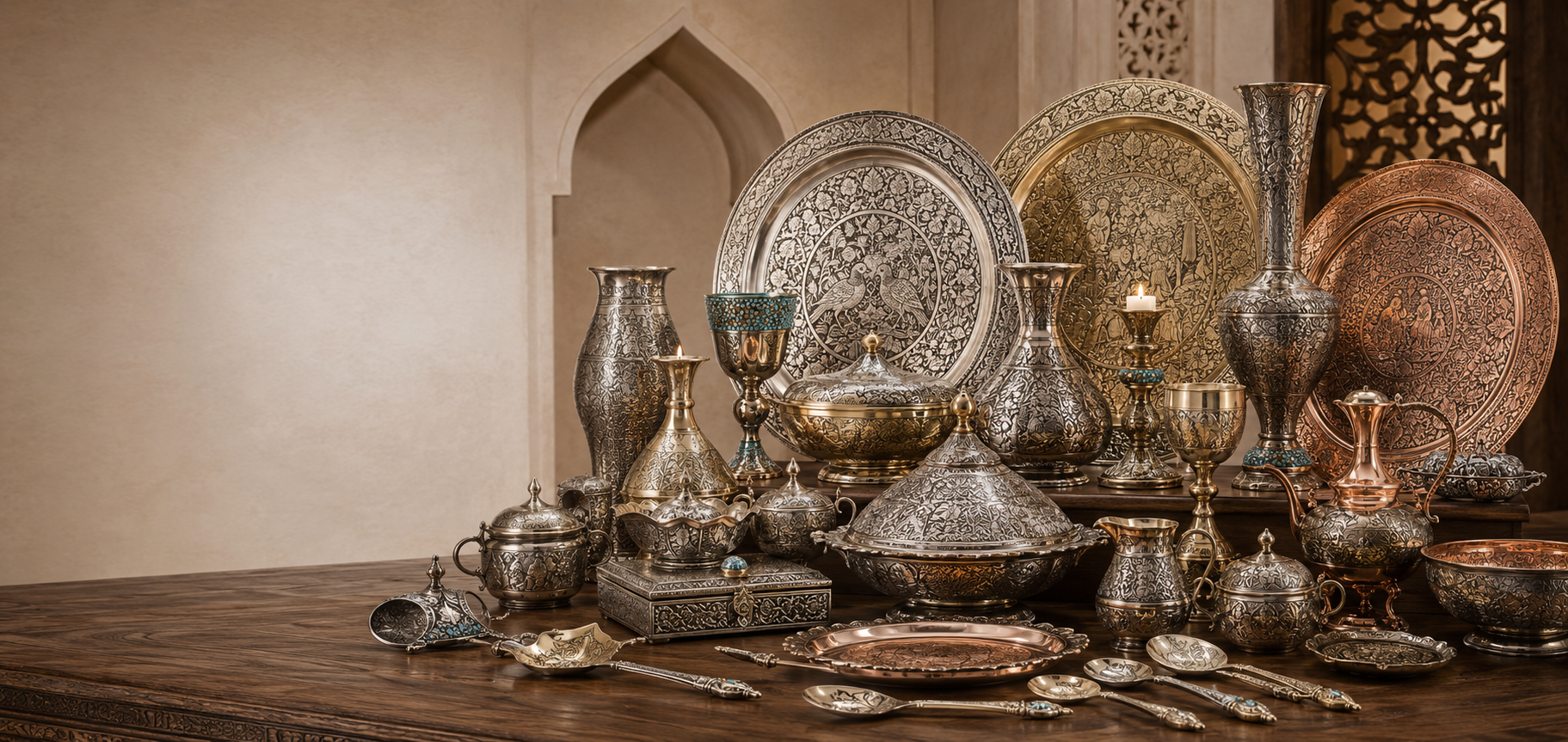
Modern Renaissance: The craft was significantly preserved and revived in the 20th century through the dedicated masterwork of legendary Iranian artisans like Ostad Mohammad Oraizi and Ostad Mohammad Taghi Zufan.Common Motifs & Common ItemsTraditional designs are heavily inspired by Persian culture, including floral patterns, arabesques, hunting scenes, epic mythology (such as stories from the Shahnameh), and the popular Gol-o-Morgh (flower and bird) motif.While historically used for palace items, armor, and tableware, you can find Ghalamzani applied to diverse objects today:Decorative wall-hanging plates, trays, and platters.
Fine teaware, Samovar sets, and coffee pots (Dallah).Vases, lidded candy dishes, and Ayne Shamdoon (traditional wedding mirror and candlestick sets).High-end jewelry pieces, including hand-engraved silver necklaces, rings, and earrings
Media gallery
Related posts
More articlesHow to Choose the Right Headphones for Work and Travel
A practical breakdown of fit, battery life, audio profile, and travel comfort.